
Baltimore Released Mugshot Records
A booking photograph records appearance during a specific arrest or intake event. It is not the same record as a court judgment, release record, or current custody result. The image does not prove conviction. It also does not show whether a person was released to the community, transferred to another DPSCS building, committed to a state prison, or handed to federal or immigration authority.
Maryland’s Public Information Act defines public records broadly enough to include photographs made or received by an agency. Disclosure is still decided record by record. Privacy restrictions, investigative exemptions, juvenile confidentiality, expungement, and limits on a personal base file may apply. No official source in the Baltimore research established a rule requiring every booking image to be posted online.
The most accurate description is “booking photo from a named custody episode.” Avoid using “released mugshot” as if the picture itself proves release. Pair the image with the release or court record when status matters.
Baltimore Released Mugshot Sources
The available channels have sharply different scope. Baltimore’s main booking and pretrial system is operated by Maryland DPSCS and DPDS, not by a city sheriff jail bureau. That structure explains why no sheriff release gallery or matching jail app was found.
| Channel | Has a photo? | How to access |
|---|---|---|
| Official 24/72-hour gallery | No official gallery located | Do not substitute the current DPSCS custody locator |
| Baltimore jail mobile app | No official sheriff jail app located | VINEmobile is for event search and alerts, not a promised photo archive |
| DPSCS or DPDS record request | Possible if retained and disclosable | Ask for the image from one named booking episode |
| Baltimore Police record | Possible for a police-created arrest record | Use the BPD Maryland Public Information Act channel |
| DPSCS locator | Not a released-photo archive | It removes people no longer in custody |
| Maryland registry | Yes for some current registrants | Use only for the limited population legally subject to public registration |
| Agency news or local reporting | Sometimes | Preserve the source, date, caption, and case context |
Commercial archives may display an old or mislabeled image after the government record changes. They are only leads. No commercial mugshot publisher or removal vendor should replace an official agency, court, or records-request channel.
Choose the channel by the creator of the image. A police arrest photograph, a DPDS intake image, and a DOC identification photograph may sit in different files even when they concern the same case. Naming the wrong agency can produce a valid “no records” response without resolving whether another office holds the photograph.
No Baltimore Release Mugshot Gallery
No official Baltimore City 24-hour or 72-hour release list was located. As a result, there is no official roster photo retained in those windows. The DPSCS locator is built for covered people who are currently housed, and it states that people no longer in custody because of release or escape are not listed. It also may omit some short-sentenced DPDS cases.
No Baltimore City sheriff jail-information or recent-release app was found either. VINEmobile may show event information supplied to VINE, but it is not an authoritative booking-photo gallery. A VINE event can help confirm release from a reporting custodian. It should not be used to promise that an image will appear or remain.
This absence is not a dead end. It makes a record-specific request the main official path. It also prevents a common error: taking the disappearance of a photo profile as proof that someone returned to the community. A transfer, omitted record, name mismatch, or move outside the locator’s scope can produce the same missing result.
Note: Baltimore’s state-run detention structure means an app or roster from another Maryland county does not cover Baltimore City bookings.
Request Baltimore Booking Photos
Send a narrow request to the agency that created or holds the image. For a BCBIC or Baltimore Pretrial Complex booking, begin with DPSCS or DPDS. For a photograph made as part of a Baltimore Police arrest record, use the BPD Public Information Act channel. Ask for the “booking or intake photograph, if retained and disclosable” rather than asking the agency to search for all images of a person.
- Identify the exact custody episode. Provide the full legal name, facility, approximate booking date, and case or agency identifier if known.
- Name the existing record. Ask for the booking or intake photograph tied to that event, plus its basic record identifier if disclosable.
- Use the DPSCS Public Information Act instructions and current request form for a state-held record.
- Request an electronic copy when practical and state a date range that is narrow enough to locate the image.
- If the record is withheld, ask for the legal basis, the part that can be separated and released, and the available review route.
- Compare any image received with the case and release record. A matching name alone can be unsafe.
The DPSCS request page also gives a distinct path for a former detainee’s base or medical file. Such a file is available only to that person or an authorized representative under the agency’s instructions. A request for a public booking photo and a request for one’s own restricted base file are not interchangeable.
The official DPSCS request instructions are captured below.
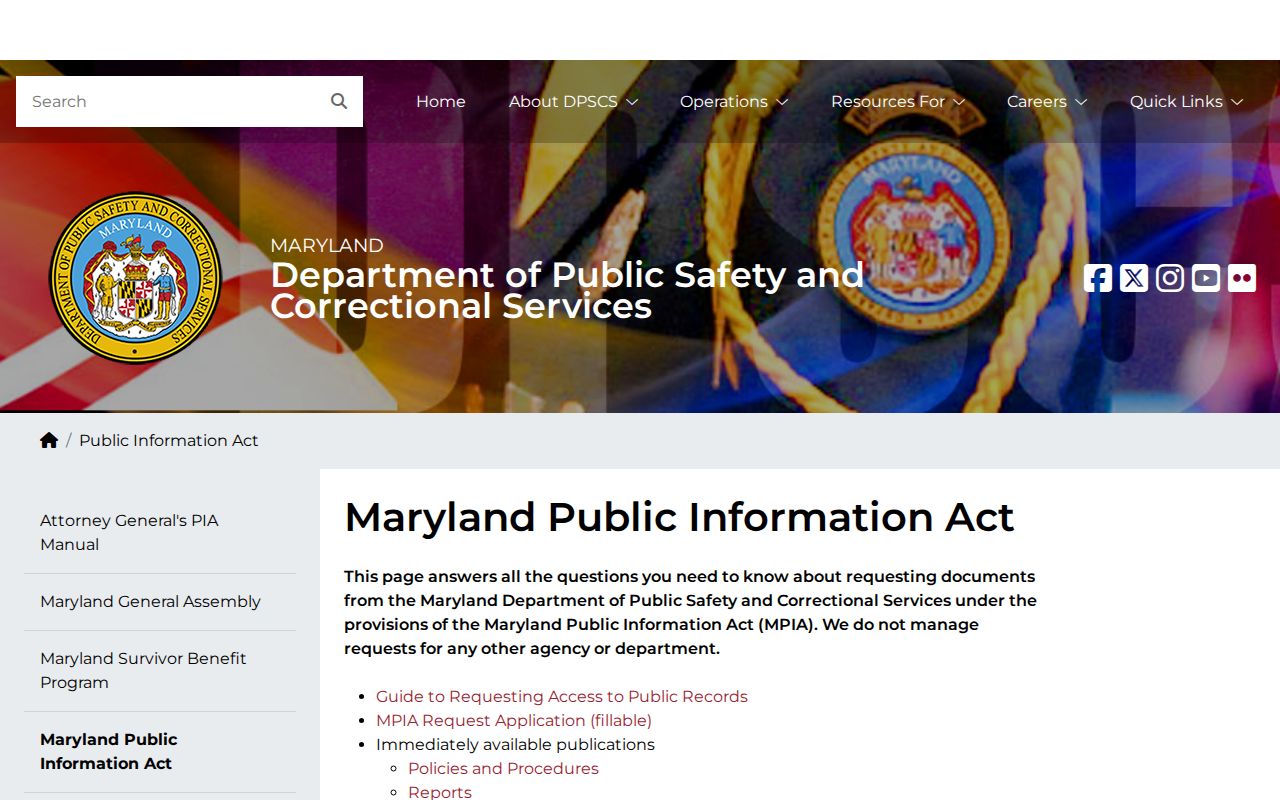
The page confirms the records-request route and former-inmate-file distinction. It does not guarantee that every requested photograph will be released.
Baltimore DOC and Registry Photos
A state-sentenced person’s identification image may exist in DPSCS records. Do not promise that it remains online after release. The current locator removes people no longer held and does not offer a public discharged profile. A retained DOC image may fall within a restricted base file or another record whose release requires agency review.
The Maryland Sex Offender Registry may include a photograph for a person currently subject to public registration. It is not a general Baltimore released-inmate search. A person’s absence does not say whether the person was booked, released, convicted of another offense, or required to register. A result applies only to the registry’s legally defined population.
The official registry search screen illustrates this narrow channel.
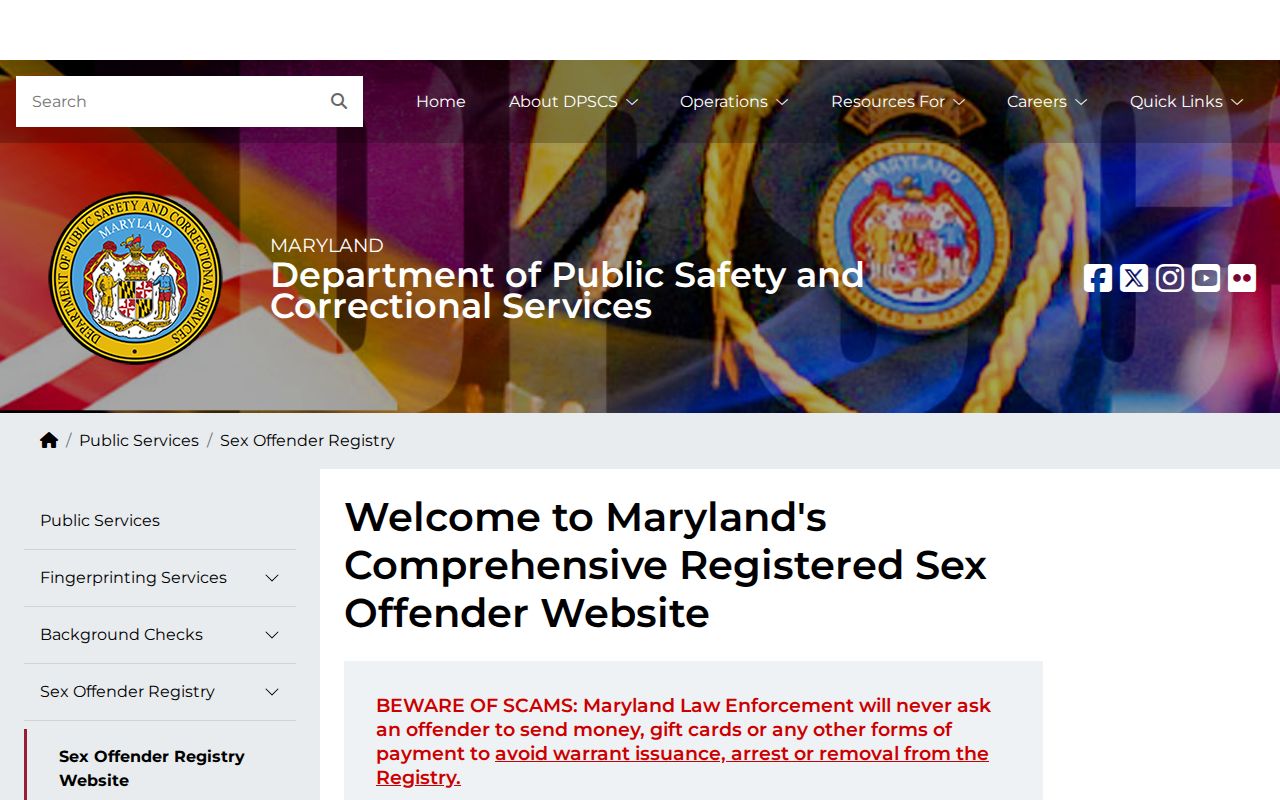
Use a registry image only with the current registry context. Never turn it into a generic booking-photo source or suggest that all released people appear there.
Baltimore Mugshots in News
An official press release or local news report may include an agency or booking image. Preserve the article date, caption, and stated source. The picture reflects the context described at publication. It does not prove a later conviction, continued custody, or release from any facility.
Commercial aggregators can keep photos long after an official page changes. Names may be wrong, images may belong to a different event, and captions can omit a dismissal or expungement. Do not republish an image only because a search engine finds it. Trace the image back to the originating agency or court record when possible.
When recent release is the real question, use the Baltimore City last-24-hours verification path. Baltimore has no exhaustive official feed, so that route checks one known person through court, VINE, and agency records. A photo by itself never supplies the release destination.
Maryland Mugshot Removal Law
Maryland Commercial Law § 14-1324 creates a no-fee removal process for qualifying publication by a commercial website that posts criminal record information and charges or solicits a fee for removal. The rule is specific. It does not mean every image on every site must be deleted on demand, and it does not make a paid removal service necessary.
The official Maryland legislative record for HB 744 documents the measure behind the commercial mugshot removal provision.
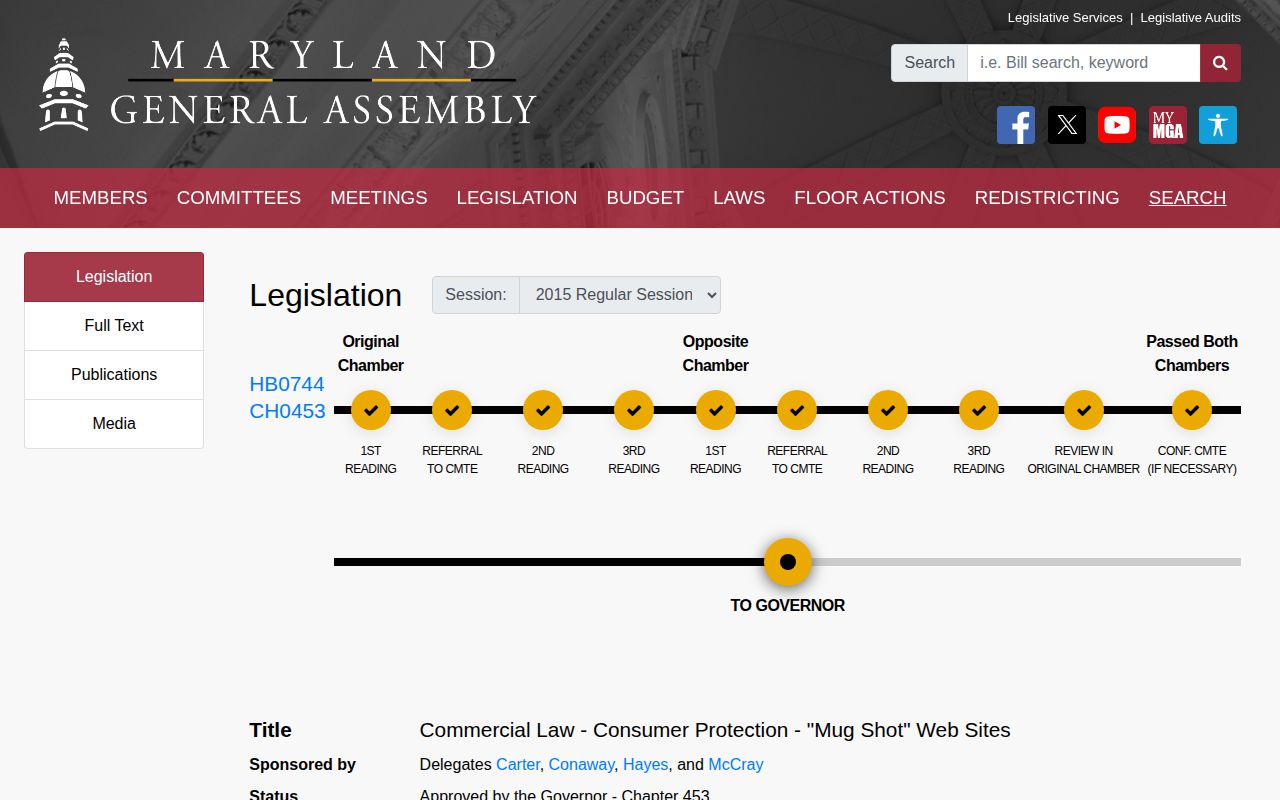
The legislative history supports the narrow commercial-publication rule. It should not be described as a universal order against agencies, courts, or news archives.
Criminal Procedure § 10-103.1 can require automatic expungement of photographs after a qualifying release without charge. Qualification and agency duties depend on the statute’s facts. Ask the record holder which provision applies rather than assuming that all photos are automatically removed.
Baltimore Expungement Removes Records
Expungement removes qualifying information from court and law-enforcement records. Maryland Courts advises a person to keep the expungement order and needed copies because the underlying record may no longer be obtainable afterward. That is a major practical issue for Baltimore City photo searches: the most durable official fallback may lawfully disappear.
Sealing, shielding, and expungement are not synonyms. Sealing limits access under a court or legal rule. Shielding removes a qualifying case from public Case Search while leaving a distinct legal record status. Expungement removes qualifying information from the identified court and police records. Juvenile and youth matters have additional confidentiality limits.
The Maryland Courts expungement guide explains the process, while the Baltimore City District Court Help Center offers limited help on expungement matters. If a source received a lawful removal or expungement notice, use that official record to address the retained copy. Do not pay an unverified vendor that claims it can change a government file.
Note: A missing photo after expungement cannot be used to infer that no booking or release ever occurred.