
BCBIC Release Paths Explained
Baltimore Central Booking and Intake Center is the common front door for adults booked on Baltimore City matters. The Maryland Department of Public Safety and Correctional Services operates it through the Division of Pretrial Detention and Services. That structure changes the search path. BCBIC can carry out a court-ordered release on recognizance, bond, dismissal, or completion of a short term. It can also close its part of a custody episode when the person moves to another building, enters Division of Correction custody, or is delivered to another lawful custodian.
The destination field matters most. A record that says only that the person left BCBIC does not establish that the person went home. Ask for the date, release type, destination, and receiving authority. A court order explains the legal basis for release, but the physical release may occur later after staff complete processing and check for other holds. For that reason, use the phrase “released from BCBIC” until the record shows return to the community.
Confirm a BCBIC Release
The official DPSCS Incarcerated Individual Locator is a current-custody tool. It asks for first and last name. DPSCS warns that it does not show everyone in custody, may omit some short-sentenced people in DPDS facilities, and removes people no longer in custody for reasons that include release or escape. A failed result is therefore a lead, not proof of release.
- Identify the correct Baltimore City District or Circuit Court case and note the case number, full legal name, and booking period.
- Search the DPSCS locator. A current BCBIC or other covered location weighs against release from state custody.
- Read the Maryland Judiciary case docket for a bail decision, recognizance order, dismissal, sentence, commitment, or later warrant.
- Check Maryland VINE for a reported release or transfer event, then compare the reporting agency and event date.
- Ask BCBIC or DPDS for the release or movement record when exact physical execution or destination matters.
A VINE release alert is tied to the reporting custody. It can lag, and a transfer may require a fresh registration. The court docket is more durable than a live locator entry, yet it records legal action rather than the moment staff open the door. Reconcile the three sources before stating the result.
BCBIC Court Release Records
A person booked at BCBIC may have a case in Baltimore City District Court or Circuit Court. The Maryland Judiciary Case Search can show the case number, charges, docket events, disposition, sentence, and release-related orders when public. Search exact names first. The official FAQ permits a partial first or last name by placing a percent sign after the first character or more, but not at the start or in the middle.
Some of the outcomes most likely to explain release are not always visible remotely. Maryland Courts says charges ending in dismissal, nolle prosequi, or acquittal are no longer shown through remote access, and a stet drops from remote view after the stated period. Sealed, shielded, expunged, juvenile, and other restricted records may also be absent. A nonrestricted file may still be available from the clerk. The District Court’s central criminal courthouse is at 500 N. Calvert Street, while Circuit Court records are handled through the Baltimore City court system. A docket can confirm the legal order. BCBIC remains the source for the operational release event.
Note: Court-order time, VINE-event time, and physical release time may differ without any record being wrong.
Request BCBIC Release Records
A targeted Maryland Public Information Act request is the durable route when no public search answers the question. DPSCS controls BCBIC and DPDS records, but it does not control the court file or a Baltimore Police record. Describe an existing record instead of asking the agency to research a question or create a recent-release list. Include the full legal name, case or other identifier, approximate booking date, facility, and a narrow date range.
Ask for the booking or admission record, movement history, recorded release date and time, release type, and destination or receiving authority. If an image is needed for a lawful personal or case purpose, request the booking or intake photograph associated with that episode, if retained and disclosable. The DPSCS PIA instructions explain exemptions, fees, and the agency’s response process. Requests may be sent on the agency application to dpscs.pia@maryland.gov or mailed to the PIA Coordinator, Office of Constituent Services, 6776 Reisterstown Road, Baltimore, MD 21215-2318.
DPSCS states that the first two hours of search and preparation are free. Its published schedule lists photocopies at fifty cents per page, a further fifty cents per page for certification, and postage where needed. Request an estimate before costs accrue. The agency need not create a custom report that does not already exist.
BCBIC Records and Contact
Use the facility line for current routing and exact-day operational questions. Staff may not be able to disclose protected facts by phone, but they can identify the office that holds a release or transfer record. The public BCBIC page also carries current facility and visiting information. It does not provide a historical release roster.
Baltimore Central Booking and Intake Center300 E. Madison Street
Baltimore, MD 21202
410-545-8080
The DPSCS main line is 410-585-3300. A useful phone question is, “Which office holds the release or transfer record for this BCBIC booking?” Keep the case number and date range ready. Do not ask staff to treat a missing locator result as proof that the person is free.
Baltimore Booking Is State Run
Baltimore City is an independent city, but its principal adult intake and pretrial detention operation is not a city sheriff jail. DPSCS and DPDS run BCBIC. This is why no official Baltimore sheriff 24-hour or 72-hour release list was found. The state locator has no released tab and no time-window filter. It is not an archive of people who passed through booking.
The governance detail prevents a common dead end. Calling a sheriff’s corrections roster line or looking for a county-style release feed will not reach the record custodian. For a named BCBIC episode, start with the Baltimore court case, use Maryland VINE for an event, and direct the record request to DPSCS. For the full custody-specific route, the Baltimore City released inmate search distinguishes pretrial, state, federal, and immigration systems.
BCBIC Facility Transfers Nearby
The official DPSCS facility locator shows several institutions in a compact Baltimore district. They do different jobs. BCBIC handles booking and intake. The broader pretrial complex uses multiple buildings. MRDCC is a reception and classification gateway for state custody. CDF has a federal pretrial role. MTC combines detention, correctional, and transition functions. YDC serves a protected youth population, while BCCC is a correctional and pre-release setting.
The official facility list illustrates why one building’s status cannot answer the whole release question.
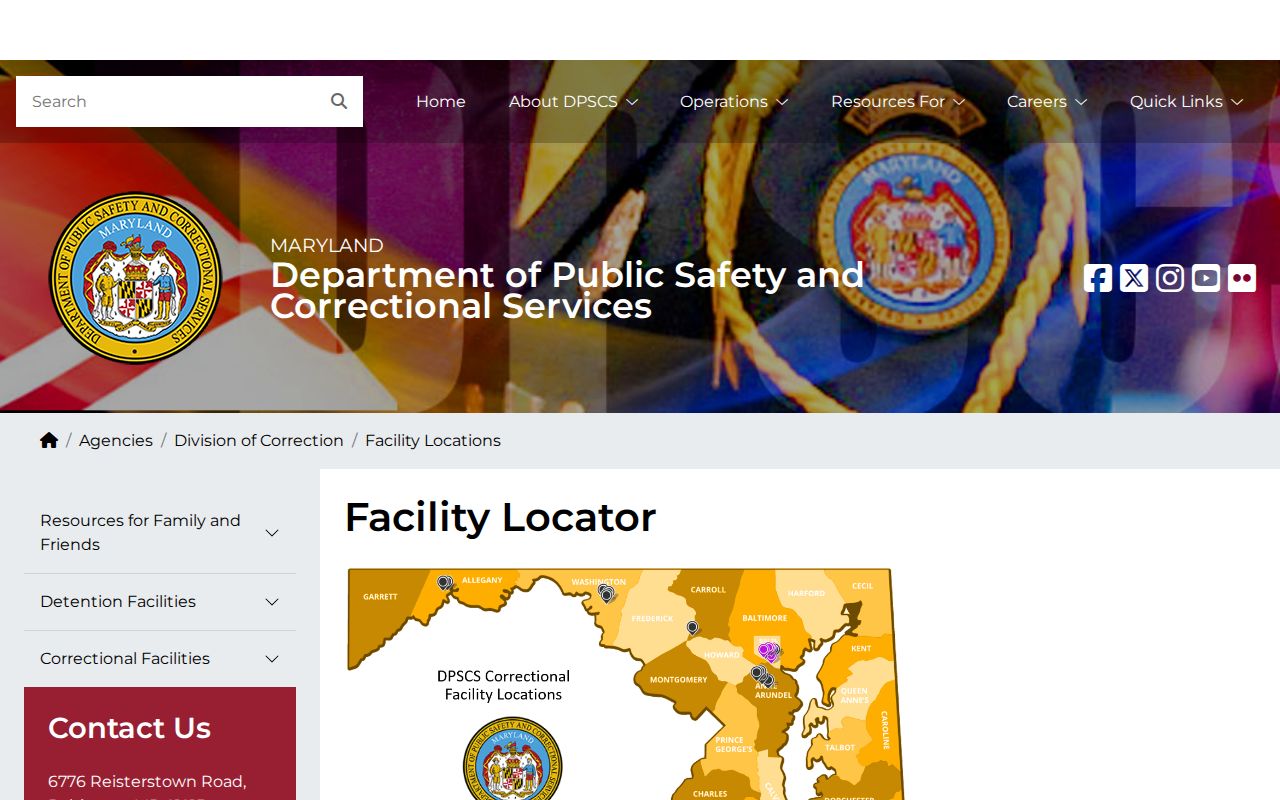
Each destination calls for a different follow-up. A move to MRDCC or another DOC site remains state custody. A CDF departure may lead to federal custody. A youth transfer may not appear in public sources. Record the receiving facility before describing a community release.
BCBIC Official Facility Record
The official BCBIC page confirms the facility’s identity and supplies current operating information. Its focus is the institution, not a historical release search. That limit is useful because it keeps facility facts separate from the record needed to prove a past release.
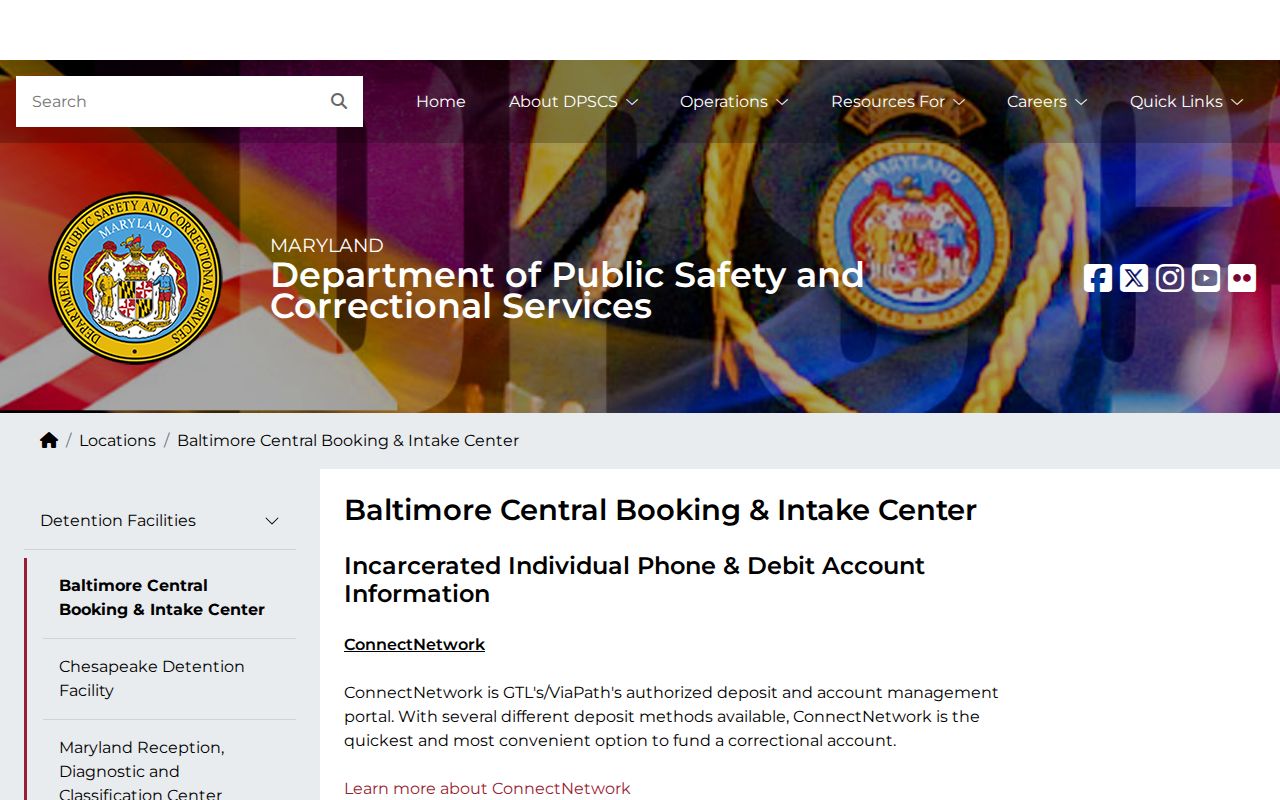
Use the page to verify that BCBIC is the correct custodian, then use the court, VINE, and PIA routes for the release event.
- Release
- The end of custody by a named facility or agency.
- Transfer
- A move to another custodian while legal custody continues.
- Recognizance
- A court-ordered pretrial release based on a promise to return.
- Detainer
- A request by another authority concerning custody or notice before release.
Identity checks matter at every stage. Common names, spelling changes, and a short booking period can lead to the wrong case or no public match. Compare the court, booking date, known identifier, and reporting agency before linking an event to one person. If an authorized requester has a past personal file issue, DPSCS directs former detainees to the institution of release or the Case Management Office for Operations at 410-585-3300. The agency says a former detainee’s base or medical file is available only to that person or an authorized representative. That personal-file route is separate from the public request for a disclosable release or transfer record.